(March 1, 2020) Danger will be ever-present during the Yukon 2020™ record-attempt expedition. This 2,020-mile (3,250 km) journey includes a myriad of situations that Art “Karts” Huseonica and Lauren “Lolo” Sherwood must be acutely aware of, including hypothermia, bears, mosquitoes, and people. The team is not afraid of any of these, but hold a respect for all and plan to manage their risks to successfully complete the adventure. 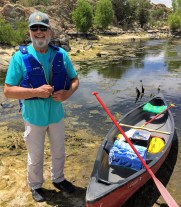
Except for a 1.2-mile portage, when the team puts in on June 4, they will be paddling the distance on lakes and a river that is fed by glacial melt and snow melt water. The cold water is their foremost danger. If they tip over, they have only a few minutes before their body’s temperature begins to drop below 95 degrees Fahrenheit (35 degrees Celsius). Once this happens, their bodies and minds will begin to slow down to the point of not being able to save themselves. After getting to shore, hopefully with their canoe and gear, they must immediately remove all their clothes, put on dry clothing, and then quickly start a fire to warm up their bodies.
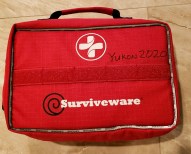 Each will be carrying a water-proof emergency fire-starter kit, good for starting a fire even in inclement weather. Karts and Lolo are trained in CPR and wilderness first aid. Preparation and self-reliance will be key in such austere environments. There will be surprises, but it wouldn’t be an adventure without them.
Bears are certainly a possible problem. When making camp, the team must survey the area for recent bear signs such as paw prints and scat. After deciding on a camp site the team will secure all their food in air tight containers and avoid leaving any food scraps laying around camp. Black bears are the most common bear that the team will encounter. Grizzlies (brown bears) also frequent the team’s route.
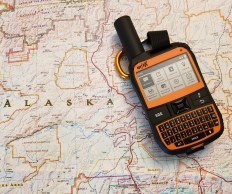 Other preventive measures include good camp protocols, bear spray, and a gun (as a bear banger). The team will use these in that order of precedence. Supporting the team are the assets provided by a Globalstar systems satellite telephone and their SPOT X GPS tracking and SOS device (pictured). A link will be published so that everyone can track the team. Their SPOT device allows for text and email communications, and has an SOS feature.
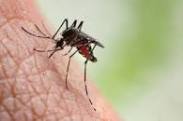
Mosquitoes, also known as midges will certainly give Karts and Lolo discomfort during their expedition. They will be prepared with body mosquito netting, tent netting, and bug spray. Dangers include dengue virus from mosquitoes and Lyme disease from ticks. Also an unavoidable irritant on portions of their expedition will be black flies and biting midges, also known as no-see-ums. Black flies can cause black fly fever and blindness if left untreated.
Although people are Karts and Lolo’s least dangerous entity, the team is still aware of issues related to people along the river and in the fishing villages. Occasionally, adventurers are seen as easy targets of theft and other misdeeds. To provide extra 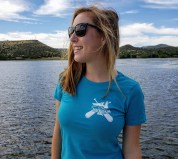 measures of safety and security, the team will be ever-aware of their surroundings, be respectful of village residents and people on the river, and use personal security code words and signals. They recently met with an indigenous resident who briefed them on how to conduct themselves in remote villages.
Karts and Lolo are adventurous people up for the challenges, and not afraid of the known or the unknown. They know how to manage risks, assess situations, and have a plan in place to respond accordingly. This includes comprehensive expedition insurance. Of course, flexibility is an essential component of such a dangerous endeavor focused on a record-attempt. 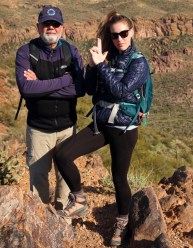
To help cover the enormous costs of such a complex expedition, interested folks can donate monies through the Yukon 2020™ team’s Fund Me page. A free t-shirt is given to those donating $30 or more. Or you can contact Karts through the Contact page on this Blog or via eMail at arthuseonica@gmail.com, phone USA 443-254-5730.
Those wishing to become tiered sponsors can check out the team’s Support page to see what matches the amount that you can give.



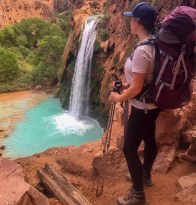
 reference. Ms. Johnson and several ladies, ages 27-52, put in at Whitehorse, several miles from what today is considered the river’s source. It was certainly an epic adventure.
 turn 26 when they reach the Arctic Circle in late June. To properly document a record attempt of being the youngest and the oldest to paddle the entire Yukon River, the team is required to officially declare what they are going to do, explain what they are doing while on the expedition, and then tell what they did at the completion. In addition, during the expedition, they are required to provide a trilogy of proof. This includes: a publicly accessible GPS track, documented eyewitnesses, and location selfies and videos.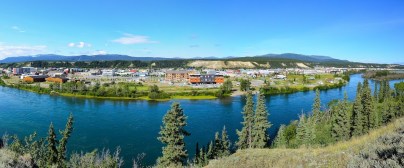
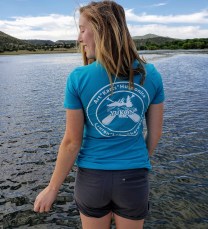 bag of chips is $12.00USD. You can provide direct financial support to the expedition and receive an expedition t-shirt (pictured here) at the team’s Yukon 2020™
  Arizonian Explorer